







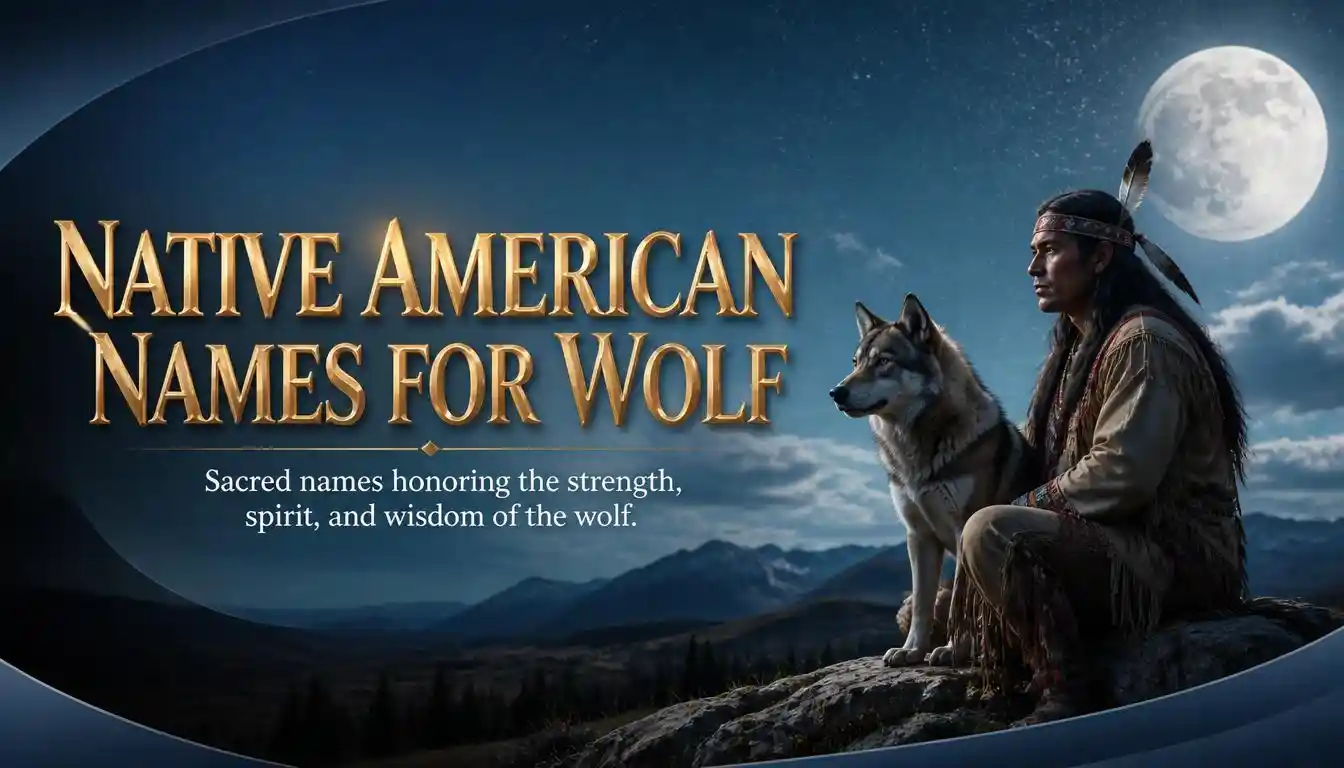
Native American names for wolf can inspire meaningful choices for baby names, pets, fictional characters, and stories connected to the natural world. Indigenous North America includes many distinct Nations, languages, and naming traditions, so a wolf-related word from one community should not be presented as a universal Native American name.
This guide explores documented Indigenous-language words for wolf, traditional wolf-related naming examples, and modern nature-inspired alternatives. You will also learn how to research meanings, understand cultural backgrounds, and choose a name respectfully.
Whether you want a name that reflects wilderness, strength, loyalty, or the mystery of wolves, understanding its origin is the best place to start.
Indigenous Words That Mean Wolf
The following words are associated with wolf in specific Indigenous languages. They are presented as vocabulary examples, not automatically as traditional personal names. Pronunciation and usage should be confirmed with reliable resources from the relevant language community.
1. Ma’iingan
Meaning: Wolf.
Origin: Anishinaabemowin, an Indigenous language associated with the Anishinaabe peoples.
Pronunciation: Consult an Anishinaabe language resource or fluent speaker.
Vibe: Strong, natural, and culturally meaningful.
Best for: Language research or a character whose background has a genuine connection to Anishinaabe culture.
In Anishinaabe teachings, the wolf has an important relationship with humanity and is associated with companionship and kinship. Its cultural significance extends beyond its literal meaning.
2. Mahihkan
Meaning: Wolf.
Origin: Cree.
Pronunciation: Check the pronunciation used in the particular Cree dialect.
Vibe: Grounded, distinctive, and connected to the wilderness.
Best for: Learning Cree vocabulary or developing a carefully researched character.
Cree includes several dialects, so spelling and pronunciation can vary. Confirm the word with an appropriate Cree language resource before using it as a personal name.
3. Amaruq
Meaning: Wolf.
Origin: Inuktitut, an Inuit language.
Pronunciation: Verify the local pronunciation with an Inuktitut language resource.
Vibe: Compact, bold, and connected to Arctic wildlife.
Best for: Research into Inuit-language vocabulary or an Arctic-inspired fictional setting.
Inuit cultures are distinct from other Indigenous cultures in North America. Identifying the language accurately helps preserve that distinction.
4. Kaganaq
Meaning: Wolf.
Origin: Alutiiq.
Pronunciation: Consult an Alutiiq language resource.
Vibe: Uncommon to many English-speaking readers and closely associated with Alaska’s Indigenous languages.
Best for: Language learning, educational projects, and culturally informed wildlife stories.
This is a documented Alutiiq word for wolf. It should not be assumed to be a traditional given name without additional evidence.
5. G̠ooch
Meaning: Wolf.
Origin: Tlingit.
Pronunciation: Ask a knowledgeable Tlingit speaker about the spelling and pronunciation.
Vibe: Strong, distinctive, and culturally significant.
Best for: Researching Tlingit language and wolf-related cultural traditions.
Wolf has an important place in some Tlingit clan traditions and ancestral histories. Its significance depends on the specific community and context.
6. Gibuu
Meaning: Wolf.
Origin: Documented in Gitxsan and Nisga’a language contexts.
Pronunciation: Confirm with a speaker or language resource from the relevant community.
Vibe: Natural, distinctive, and rooted in Indigenous language.
Best for: Exploring the connection between language, wildlife, and cultural identity in northwestern British Columbia.
Before using this word as a personal name, verify its spelling, meaning, and cultural context with the appropriate language community.
Traditional Wolf-Related Names in Indigenous Stories
Some Indigenous naming traditions connect names to clan identity, ancestral histories, family relationships, and stories passed between generations. These traditions vary widely and should not be treated as one shared system.
A documented Ho-Chunk oral tradition describes four ancestral wolf brothers associated with the Wolf Clan. Names or descriptive labels appearing in that account include:
7. Clear Blue Sky
Meaning: A descriptive phrase evoking a clear daytime sky.
Origin: A name associated with a specific Ho-Chunk oral tradition.
Vibe: Open, peaceful, and connected to the sky.
Best for: Understanding how descriptive names can function within a particular cultural story.
8. Black Wolf
Meaning: A wolf described by its black coloring.
Origin: Associated with the same Ho-Chunk account.
Vibe: Powerful, dark, and mysterious.
Best for: Researching wolf imagery in traditional storytelling.
9. White Wolf
Meaning: A wolf described by its white coloring.
Origin: Associated with the same Ho-Chunk account.
Vibe: Pale, striking, and wintry.
Best for: Studying how animal descriptions appear in an individual cultural narrative.
10. Gray Fur
Meaning: A descriptive phrase referring to gray fur.
Origin: Associated with the fourth ancestral wolf brother in that Ho-Chunk account.
Vibe: Subtle, natural, and understated.
Best for: Understanding descriptive naming in a specific oral tradition.
These examples belong to a particular account and should not be represented as names shared by every Indigenous Nation. They are also not interchangeable with verified Indigenous-language translations of the word “wolf.”
Modern Nature-Inspired Wolf Names
If you want a name with the strength and wilderness associations of a wolf but do not need an Indigenous-language name, consider these English-language alternatives.
11. Storm
Meaning: A period of intense weather.
Origin: English.
Vibe: Bold, dramatic, and energetic.
Best for: A fictional wolf, adventurous character, or strong-sounding pet name.
12. Cedar
Meaning: An evergreen tree name.
Origin: English, derived from the tree name.
Vibe: Earthy, calm, and outdoorsy.
Best for: Nature-loving families and woodland-inspired characters.
13. Flint
Meaning: A hard stone historically used to make tools and sparks.
Origin: English.
Vibe: Rugged, sharp, and confident.
Best for: A wolf character with a tough personality or a memorable pet name.
14. Ash
Meaning: A tree name; also a word for the residue left after burning.
Origin: English.
Vibe: Quiet, understated, and mysterious.
Best for: A gray-coated animal or a character with a subtle, reserved personality.
15. River
Meaning: A natural stream of flowing water.
Origin: English.
Vibe: Peaceful, free-spirited, and gender-neutral.
Best for: A baby name, literary character, or animal companion.
16. Ember
Meaning: A small, glowing piece of burning material.
Origin: English.
Vibe: Warm, vivid, and slightly mysterious.
Best for: A reddish-brown animal or a fantasy character.
These alternatives are not Native American names. They offer a similar nature-inspired feeling without claiming an Indigenous origin.
How to Choose the Right Wolf-Related Name
Choosing a meaningful name involves more than finding an attractive sound. Consider the following points before making your decision.
1. Identify your purpose. Decide whether the name is for a baby, pet, fictional character, or research project.
2. Confirm the language. Identify the specific Nation and language instead of relying on the broad label “Native American.”
3. Verify the meaning. Make sure a word actually means wolf and is not simply associated with another animal, a clan, or a particular story.
4. Check pronunciation. Indigenous languages may include sounds and spelling conventions that differ from English. Use community language resources whenever possible.
5. Understand cultural context. Some names are connected to family lineage, community identity, or ceremonial traditions. A publicly documented word is not necessarily an appropriate personal name for every situation.
6. Consider everyday use. For a baby or pet, think about spelling, pronunciation, nicknames, and how naturally the name fits into daily life.
For fictional characters, research the specific community that inspires the story. This creates a more accurate portrayal than combining unrelated Indigenous words and traditions into a single imagined culture.
Popular vs. Unique Wolf Names
The terms popular, rare, and unique have different meanings when discussing names.
- Popular names are used frequently within a defined community or population.
- Unique names feel distinctive to the person choosing them.
- Rare names have relatively few recorded uses in a particular population or period.
- Culturally specific names belong to particular linguistic or traditional contexts.
An Indigenous-language word may be unfamiliar to English-speaking readers but well established within its own community. Unfamiliarity alone does not make a name rare or unique.
If cultural authenticity matters to you, prioritize accurate origins and respectful use over choosing a name simply because it sounds unusual.
Frequently Asked Questions About Native American Names for Wolf
1. What are some Native American names that mean wolf?
Documented Indigenous-language words associated with wolf include Ma’iingan in Anishinaabemowin, Mahihkan in Cree, Amaruq in Inuktitut, Kaganaq in Alutiiq, G̠ooch in Tlingit, and Gibuu in Gitxsan and Nisga’a contexts. Confirm each word’s spelling, pronunciation, and usage with a reliable resource from the relevant community.
2. Are all Native American wolf names from the same language?
No. Indigenous North America includes many distinct Nations and languages. Each has its own vocabulary, history, and naming practices. A word documented in one language should not automatically be attributed to another Nation or described as a universal Indigenous name.
3. What do wolves symbolize in Indigenous cultures?
Wolves have different meanings across Indigenous traditions. In particular communities, they may appear in stories about kinship, companionship, clan identity, or ancestral relationships. Their symbolism is not identical everywhere, so it is best to explore the teachings of a specific Nation rather than generalize across Indigenous cultures.
4. Can I use an Indigenous-language wolf word as a baby name?
Research the word carefully before making that choice. A word that translates as wolf is not necessarily a traditional given name, and some names have specific cultural or family significance. Verify the meaning, learn its context, and consider seeking guidance from the relevant community if the name has traditional associations.
5. How do I find an authentic Indigenous wolf name for a character?
Begin by deciding which Indigenous Nation or community informs the character’s background. Research its language, history, and storytelling traditions through trustworthy community resources. Confirm whether the word is an animal term, a personal name, or a culturally specific designation before using it in your story.
6. Are nature-inspired names the same as Native American names?
No. English nature-inspired names have different linguistic origins from words in Indigenous languages. Names associated with weather, trees, rivers, and stones can convey wilderness and strength without being presented as Indigenous names. Clearly distinguishing their origins makes naming choices more accurate.
7. How can I verify the meaning of an Indigenous-language word?
Look for a language department, cultural center, museum, or educational resource connected to the relevant Nation. Community-authored dictionaries and language programs are particularly useful. When possible, confirm pronunciation and cultural usage with a fluent speaker or knowledgeable community member.
Conclusion
Native American names for wolf provide an opportunity to explore Indigenous languages, wildlife, and cultural traditions. However, the most meaningful approach is to understand each word’s specific origin rather than treating all Indigenous cultures as one.
Documented wolf-related words, names from particular oral traditions, and modern nature-inspired alternatives can all offer useful ideas, provided their origins are clearly distinguished. Verify meanings, respect cultural context, and choose a name that suits your purpose.
A good wolf-related name is not just about its sound. It is also about understanding what the name means, where it comes from, and how to use it respectfully.
.

I’m Shahid Imran, the creator of Reachora Media, a website dedicated to names, their meanings, origins, pronunciations, and interesting name-related information. Explore my website to discover meaningful and unique names with helpful, easy-to-understand details: Reachora Media