










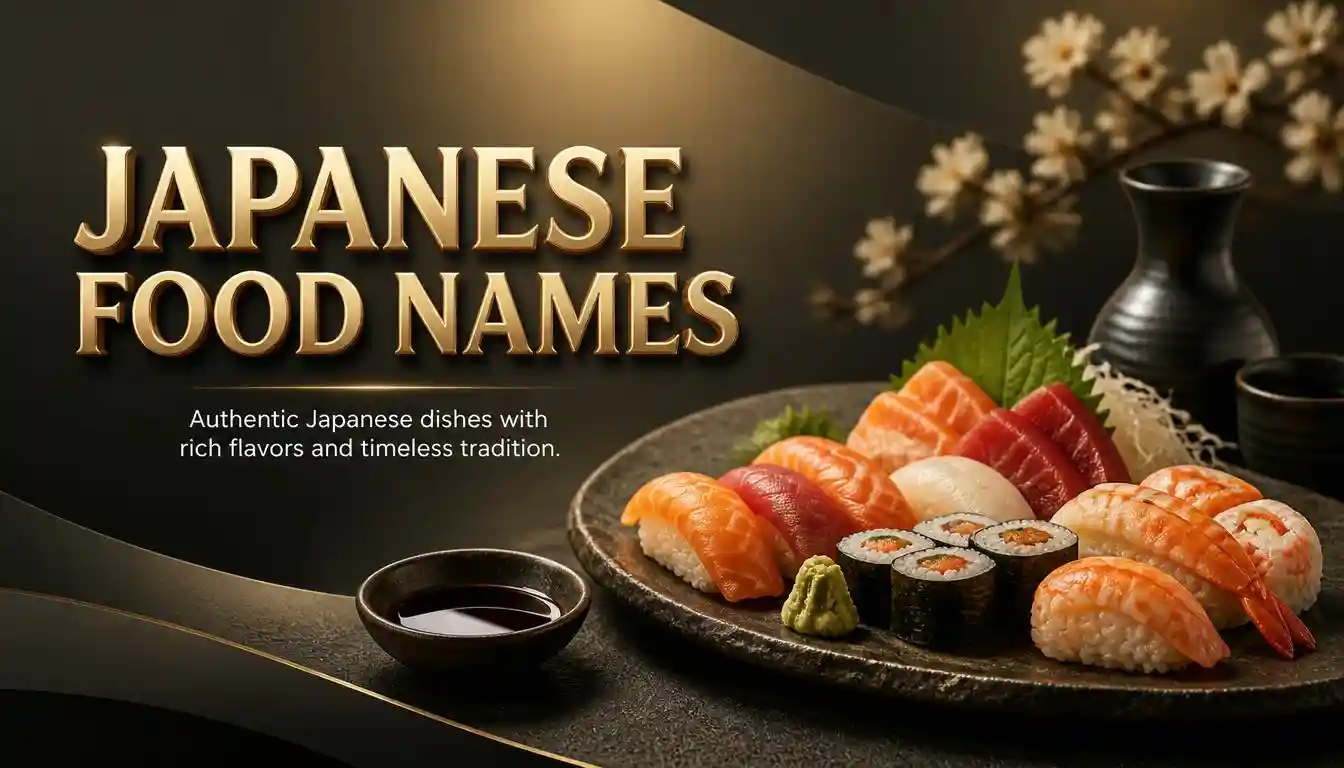
Japanese cuisine is famous for its fresh ingredients, balanced flavors, beautiful presentation, and remarkable variety. From sushi and ramen to crispy tempura, comforting rice bowls, savory street foods, and delicate desserts, Japanese food offers something for almost every taste. If you are searching for Japanese food names, this guide introduces more than 100 popular and traditional Japanese dishes, along with their meanings, ingredients, and distinctive characteristics.
Whether you want to explore authentic Japanese dishes, discover Japanese food names in English, learn about traditional Japanese meals, or find delicious foods to try at a restaurant, this comprehensive list will help you understand the names and flavors of Japanese cuisine. You will also discover Japanese sushi names, noodle dishes, rice-based meals, vegetarian options, street food favorites, and traditional Japanese sweets.
Popular Japanese Food Names Everyone Should Know
Japanese food includes much more than sushi and ramen. Many dishes combine rice, vegetables, seafood, meat, noodles, and flavorful sauces to create satisfying meals. Here are some of the most popular Japanese food names and their descriptions.
1. Sushi (すし)
Sushi is one of the most famous Japanese foods worldwide. It combines seasoned rice with ingredients such as raw or cooked seafood, vegetables, and occasionally egg. Common varieties include nigiri, maki, and temaki. Not every type of sushi contains raw fish.
2. Ramen (ラーメン)
Ramen combines Japanese noodles with a flavorful broth and toppings such as sliced pork, boiled eggs, seaweed, and green onions. Popular broth styles include shoyu, miso, shio, and tonkotsu.
3. Tempura (天ぷら)
Tempura consists of seafood or vegetables coated in a light batter and deep-fried until crisp. Shrimp, pumpkin, sweet potato, and eggplant are common choices.
4. Teriyaki (照り焼き)
Teriyaki describes a Japanese cooking technique that gives food a glossy finish using a sweet-savory glaze. Chicken, fish, and beef are common ingredients in teriyaki dishes.
5. Tonkatsu (とんかつ)
Tonkatsu is a breaded and deep-fried pork cutlet. It is typically served with shredded cabbage, a thick savory sauce, and rice.
6. Gyoza (餃子)
Gyoza are Japanese dumplings filled with ground pork, cabbage, garlic, and ginger. Cooks often pan-fry them to create a crispy bottom and a tender filling..
7. Miso Soup (味噌汁)
Miso soup is a traditional Japanese soup made with miso paste and dashi broth. Tofu, seaweed, mushrooms, and green onions are common additions.
8. Onigiri (おにぎり)
Onigiri are Japanese rice balls that come in triangular or round shapes. Popular fillings include salted salmon, pickled plum, and tuna mayonnaise, and many varieties feature a seaweed wrap..
9. Yakitori (焼き鳥)
Yakitori consists of chicken pieces grilled on skewers, often seasoned with salt or brushed with a sweet-savory tare sauce. Different cuts of chicken can be used.
10. Okonomiyaki (お好み焼き)
Okonomiyaki is a savory Japanese pancake made with a batter, cabbage, and various additional ingredients. Depending on the region and recipe, it may contain pork, seafood, noodles, or other toppings.
More Popular Japanese Foods
| Japanese food name | Description |
| Sukiyaki | Thinly sliced meat and vegetables simmered in a sweet-savory broth |
| Shabu-Shabu | Thin slices of meat and vegetables briefly cooked in hot broth |
| Takoyaki | Small batter balls traditionally filled with octopus |
| Udon | Thick Japanese wheat noodles |
| Soba | Thin noodles traditionally made with buckwheat |
| Yakisoba | Stir-fried noodles with vegetables and a savory sauce |
| Donburi | A Japanese rice bowl topped with meat, seafood, egg, or vegetables |
| Chawanmushi | A delicate savory steamed egg custard |
| Edamame | Young green soybeans, commonly served as a snack or appetizer |
| Agedashi Tofu | Lightly fried tofu served in a savory broth |
| Karaage | Japanese-style fried chicken, usually marinated before frying |
| Korokke | Japanese croquettes made with mashed potato or other fillings |
| Oyakodon | A rice bowl topped with chicken and egg |
| Gyudon | A rice bowl topped with thinly sliced beef and onions |
| Katsudon | A rice bowl topped with a breaded pork cutlet and egg |
Traditional Japanese Foods and Their Names
Traditional Japanese food emphasizes seasonal ingredients, careful preparation, and a balance of flavors and textures. Rice, fish, vegetables, soy products, noodles, and fermented ingredients have important places in Japanese cooking.
1. Washoku (和食): Traditional Japanese Cuisine
Washoku refers to traditional Japanese dietary culture and cuisine. It often emphasizes seasonal ingredients, rice, soup, side dishes, and thoughtful presentation. Its dishes vary across regions, families, and occasions.
2. Kaiseki (懐石料理): A Traditional Multi-Course Meal
Kaiseki offers a carefully arranged, multi-course Japanese dining experience. Chefs create seasonal dishes and pay close attention to presentation.. The term can refer to different related dining traditions depending on the context.
3. Japanese Bento Meals (弁当)
A bento is a packed meal arranged in a box or container. It may include rice, fish or meat, vegetables, pickles, and egg. Bento meals are popular for work, school, travel, and takeaway dining.
4. Shabu-Shabu and Sukiyaki
Shabu-shabu features thinly sliced meat and vegetables cooked briefly in hot broth. Sukiyaki typically uses a sweeter, richer broth with ingredients such as beef, tofu, vegetables, and noodles.
5. Chawanmushi and Other Traditional Dishes
Chawanmushi is a smooth steamed egg custard that may contain mushrooms, shrimp, chicken, or other ingredients. Other traditional dishes include grilled fish, simmered vegetables, tofu preparations, and Japanese pickles.
Other Traditional Japanese Food Names
| Food name | What it is |
| Nimono | Ingredients simmered in seasoned broth |
| Yakizakana | Grilled fish |
| Tsukemono | Japanese pickled vegetables |
| Tamagoyaki | Japanese rolled omelet |
| Natto | Fermented soybeans with a distinctive sticky texture |
| Hiyayakko | Chilled tofu served with toppings |
| Nikujaga | A comforting dish of meat, potatoes, and onions simmered in seasoned liquid |
| Oden | Ingredients such as daikon, tofu products, and boiled eggs simmered in broth |
| Zaru Soba | Chilled soba noodles served with dipping sauce |
| Ochazuke | Rice served with green tea or another light broth |
Japanese Sushi Names and Different Types of Sushi
Sushi is a central part of Japanese food culture and comes in several forms. Understanding sushi names makes it easier to order at a Japanese restaurant or explore a sushi menu.
1. Nigiri (握り寿司)
Nigiri consists of a small mound of seasoned rice topped with an ingredient such as salmon, tuna, shrimp, or egg. Some varieties include a narrow strip of seaweed to hold the topping in place.
2. Maki (巻き寿司)
Maki is rolled sushi that combines rice and fillings wrapped in seaweed. Cooks slice the roll into bite-sized pieces and fill it with ingredients such as seafood, cucumber, avocado, or other vegetables..
3. Temaki (手巻き寿司)
Temaki is hand-rolled sushi shaped like a cone. Seaweed surrounds seasoned rice and fillings, making it convenient to eat by hand.
4. Chirashi (ちらし寿司)
Chirashi sushi features seasoned rice topped or mixed with ingredients such as seafood, vegetables, and egg. Its colorful presentation makes it a distinctive Japanese dish.
5. Inari Sushi (いなり寿司)
Inari sushi consists of seasoned sushi rice tucked inside pockets of fried tofu called aburaage. It often has a slightly sweet flavor.
6. Uramaki (裏巻き)
Uramaki is an inside-out roll in which the rice is on the outside and the seaweed is inside. This style is especially familiar in many international sushi restaurants.
7. Sashimi vs. Sushi
Sashimi consists of carefully sliced raw fish or seafood served without sushi rice. Sushi, by contrast, is defined by its seasoned rice. Some sushi contains raw seafood, while other varieties use cooked seafood, egg, or vegetables.
More Japanese Sushi Names
- Futomaki: A thick sushi roll containing several fillings.
- Hosomaki: A thin roll, often containing one main filling.
- Gunkan Maki: A small oval of rice wrapped with seaweed to hold soft or loose toppings.
- Ebi Nigiri: Nigiri topped with shrimp, commonly cooked.
- Tamago Nigiri: Nigiri topped with Japanese omelet.
- Salmon Maki: A sushi roll featuring salmon.
- Kappa Maki: A thin roll filled with cucumber.
- Tekka Maki: A thin roll filled with tuna.
Japanese Noodle Dishes: Ramen, Udon, Soba, and More
Japanese noodle dishes are enjoyed hot or cold, in soups or with dipping sauces, and stir-fried with vegetables and other ingredients. Each noodle variety has its own texture and traditional uses.
1. Ramen
Ramen features wheat noodles served in broth. Regional and restaurant styles differ in flavor, thickness, toppings, and preparation.
2. Udon (うどん)
Udon noodles are thick, chewy wheat noodles. They can be served in a hot broth, chilled with dipping sauce, or stir-fried.
3. Soba (そば)
Soba noodles traditionally contain buckwheat flour, although some varieties also include wheat flour. People enjoy them hot in broth or cold with a dipping sauce..
4. Yakisoba (焼きそば)
Yakisoba is a stir-fried noodle dish prepared with vegetables and often meat or seafood. A tangy, savory sauce gives it its recognizable flavor.
5. Somen (そうめん)
Somen are very thin wheat noodles. They are commonly served chilled with a dipping sauce during warm weather.
6. Tsukemen (つけ麺)
Tsukemen is a noodle dish served with noodles separate from a concentrated dipping broth. Diners dip each portion of noodles into the broth before eating.
More Japanese Noodle Dishes
| Noodle dish | Description |
| Kitsune Udon | Udon topped with sweet-seasoned fried tofu |
| Tempura Udon | Udon served with tempura |
| Kake Udon | Udon served in a simple hot broth |
| Zaru Soba | Chilled soba served on a tray with dipping sauce |
| Kake Soba | Soba served in hot broth |
| Tanuki Soba | Soba topped with crunchy tempura batter pieces in many regional styles |
| Hiyashi Chuka | Chilled ramen-style noodles with assorted toppings and dressing |
| Champon | A noodle dish associated with Nagasaki, typically served with vegetables and seafood or meat |
| Curry Udon | Udon served with Japanese curry broth |
| Nabeyaki Udon | Udon simmered in a hot pot with assorted toppings |
What is the difference between ramen, udon, and soba? Ramen features springy wheat noodles and often comes in a richly flavored broth.. Udon uses thick, chewy wheat noodles, while soba uses noodles traditionally made from buckwheat. Their flavors, textures, and common serving styles differ.
Japanese Rice Dishes and Rice-Based Meals
Rice is a staple of Japanese cuisine and appears in everything from simple side dishes to complete meals. Japanese rice dishes range from portable snacks to hearty bowls topped with meat, seafood, or vegetables.
1. Onigiri: Japanese Rice Balls
Onigiri are shaped rice portions that may contain pickled plum, salmon, bonito flakes, or other fillings. They are popular as portable snacks and lunch foods.
2. Donburi: Japanese Rice Bowls
Donburi refers to a bowl of rice topped with ingredients such as beef, chicken, seafood, egg, or vegetables. The name appears in many familiar Japanese meals.
3. Katsudon (カツ丼)
Katsudon combines rice with a breaded pork cutlet, often simmered with egg and onion in a seasoned sauce.
4. Gyudon (牛丼)
Gyudon is a rice bowl topped with thinly sliced beef and onions simmered in a savory-sweet sauce.
5. Oyakodon (親子丼)
Oyakodon features chicken and egg cooked with onions and seasonings, then served over rice. Its name is commonly interpreted as “parent-and-child bowl,” referring to chicken and egg.
6. Omurice (オムライス)
Omurice combines seasoned fried rice with an omelet. Ketchup is a common ingredient or topping, although recipes vary.
7. Takikomi Gohan (炊き込みご飯)
Takikomi gohan is rice cooked with ingredients such as mushrooms, vegetables, chicken, or other additions. The rice absorbs their flavors during cooking.
More Japanese Rice-Based Foods
- Unadon: Rice topped with grilled eel glazed with a sweet-savory sauce.
- Tendon: A rice bowl topped with tempura.
- Tekkadon: A rice bowl topped with tuna sashimi.
- Soboro Don: Rice topped with seasoned crumbled meat, fish, egg, or other ingredients.
- Sekihan: Rice prepared with red beans, traditionally served on special occasions.
- Okayu: Japanese rice porridge.
- Zosui: A rice soup or porridge often made with broth and additional ingredients.
- Ochazuke: Rice served with tea or broth and toppings.
- Chahan: Japanese-style fried rice.
- Curry Rice (Kare Raisu): Japanese curry served over rice.
Japanese Street Food Names You Should Know
Japanese street food is popular at festivals, outdoor markets, food stalls, and casual eateries. These foods often feature bold sauces, crisp textures, grilled ingredients, and convenient serving styles.
1. Takoyaki (たこ焼き)
Takoyaki are small, round batter balls traditionally filled with octopus. They are often topped with savory sauce, mayonnaise, seaweed flakes, and bonito flakes.
2. Yakitori
Yakitori consists of grilled chicken skewers seasoned with salt or tare sauce. It is commonly served at casual restaurants and food stalls.
3. Taiyaki (たい焼き)
Taiyaki is a fish-shaped cake traditionally filled with sweet red bean paste. Modern versions may contain custard, chocolate, or other fillings.
4. Korokke (コロッケ)
Korokke are Japanese croquettes made with mashed potatoes, meat, or vegetables. Cooks coat them in breadcrumbs and fry them until golden and crispy.
5. Okonomiyaki
Okonomiyaki is a savory pancake with cabbage and a customizable combination of ingredients. Osaka-style and Hiroshima-style versions differ in their preparation and layering.
6. Dango (団子)
Dango are small Japanese dumplings made from rice flour. Vendors often serve them on skewers with sweet sauces or other toppings.
More Japanese Street Foods
| Food name | Description |
| Ikayaki | Grilled squid, prepared in several regional styles |
| Yaki Imo | Roasted sweet potato |
| Menchi Katsu | Breaded and fried minced-meat cutlet |
| Imagawayaki | Round filled cakes, often containing sweet red bean paste |
| Butaman | Steamed buns commonly filled with pork |
| Karaage | Japanese-style marinated fried chicken |
| Senbei | Japanese rice crackers |
| Baby Castella | Small sponge cakes often sold at festivals |
| Yaki Tomorokoshi | Grilled corn, sometimes brushed with soy-based seasoning |
| Choco Banana | Banana coated in chocolate, commonly sold at festivals |
Street food choices vary by region and event, but these names provide a useful starting point for anyone exploring Japanese snacks and casual foods.
Japanese Desserts, Sweets, and Snacks
Japanese desserts range from traditional rice-flour sweets to chilled shaved ice, pancakes, and modern bakery creations.
Many traditional Japanese sweets fall under the category of wagashi, which includes a variety of confections served with tea and enjoyed during seasonal celebrations.
1. Mochi (餅)
Mochi is a chewy rice cake made from glutinous rice or glutinous rice flour. It can be eaten plain, grilled, filled, or incorporated into desserts.
2. Daifuku (大福)
Daifuku is a soft mochi confection commonly filled with sweet red bean paste. Some varieties contain strawberries, cream, or other fillings.
3. Dorayaki (どら焼き)
Dorayaki consists of two small, pancake-like cakes sandwiching a filling, traditionally sweet red bean paste.
4. Taiyaki
Taiyaki is a fish-shaped cake with a sweet filling. Although often sold as street food, it is also enjoyed as a snack or dessert.
5. Manju (まんじゅう)
Manju are filled cakes or buns, often containing sweet bean paste. Their dough and preparation vary across different types.
6. Kakigori (かき氷)
Kakigori is a Japanese shaved-ice dessert topped with flavored syrup. Some versions include condensed milk, fruit, or sweet bean paste.
7. Japanese Matcha Desserts
Matcha, a finely powdered green tea, is used in cakes, cookies, ice cream, puddings, and other sweets. It can contribute earthy, slightly bitter notes that balance sweetness.
More Japanese Desserts and Snacks
| Food name | Description |
| Yokan | A firm sweet jelly often made with red bean paste |
| Warabi Mochi | A soft, jelly-like confection traditionally made with bracken starch |
| Anmitsu | A dessert combining agar jelly, fruit, sweet beans, and syrup |
| Mitsumame | A dessert featuring agar cubes, fruit, and syrup |
| Castella | A soft sponge cake associated with Nagasaki |
| Monaka | A wafer-like confection filled with sweet bean paste |
| Senbei | Savory or sweet rice crackers |
| Pocky | Biscuit sticks coated in chocolate or other flavored coatings |
| Melon Pan | A sweet bun with a crisp, patterned outer layer |
| Purin | Japanese-style custard pudding, often topped with caramel |
| Japanese Cheesecake | A light, fluffy style of cheesecake |
| Anpan | A sweet bun traditionally filled with red bean paste |
Japanese Food Names by Category: Meat, Seafood, and Vegetables
If you are searching for Japanese chicken dishes, Japanese beef dishes, Japanese seafood dishes, or vegetarian Japanese food names, these categories make it easier to identify meals that match your preferences.
The Japanese Chicken Dishes
- Karaage: Marinated chicken pieces coated and fried until crisp.
- Yakitori: Grilled chicken skewers.
- Oyakodon: Chicken and egg served over rice.
- Chicken Teriyaki: Chicken glazed with a teriyaki-style sauce.
- Chicken Katsu: Breaded and fried chicken cutlet.
- Tori Soba: Soba served with chicken in some preparations.
- Tori Nanban: Chicken prepared with a tangy sauce, often accompanied by tartar sauce in the familiar Miyazaki-style version.
Japanese Beef Dishes
- Gyudon: Thinly sliced beef served over rice.
- Sukiyaki: Beef and vegetables simmered in a sweet-savory broth.
- Shabu-Shabu: Thinly sliced beef briefly cooked in hot broth.
- Yakiniku: Japanese-style grilled meat, often cooked at the table.
- Wagyu Steak: Steak prepared from Japanese cattle breeds known for their characteristic marbling.
- Nikujaga: A simmered dish of meat, potatoes, and onions.
- Beef Curry: Japanese curry served with beef and usually accompanied by rice.
The Japanese Seafood Dishes
- Sashimi: Thinly sliced raw fish or seafood.
- Ebi Tempura: Shrimp coated in batter and deep-fried.
- Unagi Kabayaki: Eel grilled with a sweet-savory glaze.
- Saba Shioyaki: Salt-grilled mackerel.
- Kaisendon: A rice bowl topped with assorted seafood.
- Takoyaki: Batter balls traditionally filled with octopus.
- Sanma Shioyaki: Salt-grilled Pacific saury.
Vegetarian Japanese Dishes
- Agedashi Tofu: Lightly fried tofu served with savory broth.
- Yudofu: Tofu gently heated in hot water or broth.
- Vegetable Tempura: Assorted vegetables coated in batter and fried.
- Kappa Maki: A cucumber sushi roll.
- Edamame: Young green soybeans.
- Kinpira Gobo: A seasoned dish often made with burdock root and carrot.
- Hiyayakko: Chilled tofu with toppings.
- Vegetable Udon: Udon noodles served with vegetables.
- Nasu Dengaku: Eggplant topped with a miso-based glaze.
- Goma-ae: Vegetables dressed with sesame sauce.
Important dietary note: Japanese dishes are not automatically vegetarian or vegan. Broths may contain fish, sauces may contain animal-derived ingredients, and recipes vary. Check the ingredients with the restaurant if you have specific dietary requirements.
Healthy Japanese Food Options
Japanese cuisine offers many dishes made with vegetables, fish, tofu, seaweed, and rice. However, the nutritional value of a meal depends on the ingredients, preparation method, serving size, and sauces.
Some options to consider include:
- Grilled fish: Provides protein and may supply beneficial omega-3 fats, depending on the fish.
- Edamame: Offers plant-based protein and fiber.
- Miso soup: A light soup that can contain tofu and vegetables, although sodium levels vary.
- Soba noodles: Buckwheat-based noodles can provide fiber, especially when made with a high proportion of whole buckwheat.
- Steamed rice with vegetables: Pair steamed rice and vegetables with tofu, fish, or another protein for a simple, balanced meal.
- Yudofu: Prepare this traditional Japanese tofu dish with minimal added fat for a light, simple meal.
- Vegetable dishes: Simmered, steamed, or lightly cooked vegetables can add variety to a meal.
- Sashimi: Provides protein but requires careful handling and may not be suitable for everyone.
For a balanced meal, combine a suitable protein source with vegetables and an appropriate portion of rice or noodles. Fried dishes, rich sauces, and salty broths can still be enjoyed in moderation.
Japanese Foods by Flavor and Cooking Style
Understanding cooking styles and flavor profiles can help you choose Japanese foods that suit your preferences.
| Food preference | Japanese foods to explore |
| Crispy foods | Tempura, tonkatsu, karaage, korokke |
| Savory comfort food | Ramen, udon, gyudon, curry rice |
| Grilled foods | Yakitori, yakizakana, yakiniku |
| Sweet treats | Mochi, dorayaki, taiyaki, daifuku |
| Light meals | Soba, tofu dishes, miso soup |
| Rice-based meals | Onigiri, donburi, omurice, ochazuke |
| Seafood dishes | Sushi, sashimi, unadon, kaisendon |
| Vegetarian options | Edamame, yudofu, vegetable tempura, nasu dengaku |
| Spicy options | Some ramen varieties, spicy sushi rolls, and dishes made with chili seasoning |
| Cold dishes | Zaru soba, hiyayakko, chilled somen |
Not all Japanese dishes fit neatly into one category. Ingredients, regional traditions, and individual recipes can change a dish’s flavor and preparation.
Japanese Food Names and Their Meanings
Some Japanese food names describe their ingredients, shapes, or cooking methods. Learning these meanings can make menus easier to understand.
| Japanese name | Meaning or explanation |
| Oyakodon | Commonly interpreted as “parent-and-child bowl,” referring to chicken and egg |
| Onigiri | A name for shaped rice balls |
| Yakitori | Literally associated with grilled chicken |
| Tempura | The name of a style of battered and fried food |
| Takoyaki | Commonly translated as “octopus balls” |
| Taiyaki | A fish-shaped cake; tai refers to sea bream and yaki relates to grilling or baking |
| Okonomiyaki | Often explained as “cooked as you like it,” reflecting its customizable ingredients |
| Gyudon | Beef bowl |
| Katsudon | A rice bowl topped with katsu, commonly a breaded cutlet |
| Mochi | A traditional rice cake |
| Miso Shiru | Miso soup |
| Unadon | Eel rice bowl |
| Tamagoyaki | Rolled or layered cooked egg |
| Yakisoba | Stir-fried noodles |
| Zosui | A Japanese rice soup or porridge |
| Yudofu | Tofu heated in hot water or broth |
Translations and explanations can vary because some terms are traditional culinary names rather than exact word-for-word descriptions.
Japanese Food Names in English and Japanese
Many Japanese dishes retain their Japanese names when written in English. Romanization makes these words easier to read, while Japanese script helps readers recognize the original names.
| English name commonly used | Japanese writing |
| Sushi | 寿司 |
| Ramen | ラーメン |
| Tempura | 天ぷら |
| Onigiri | おにぎり |
| Udon | うどん |
| Soba | そば |
| Gyoza | 餃子 |
| Miso soup | 味噌汁 |
| Takoyaki | たこ焼き |
| Okonomiyaki | お好み焼き |
| Tonkatsu | とんかつ |
| Yakitori | 焼き鳥 |
| Mochi | 餅 |
| Donburi | 丼 |
| Sukiyaki | すき焼き |
Pronunciation can vary slightly with regional speech and the way Japanese sounds are represented in English. Learning a few common names is a useful first step when ordering at Japanese restaurants.
How to Choose Japanese Foods to Try First
If you are new to Japanese cuisine, start with dishes that match your usual eating preferences. You do not need to try everything at once.
For First-Time Visitors
Sushi, ramen, tempura, gyoza, teriyaki chicken, and onigiri are familiar starting points. Many restaurants offer several variations, so you can choose ingredients that appeal to you.
For People Who Prefer Mild Flavors
Try udon in a simple broth, tamagoyaki, onigiri with a familiar filling, or steamed rice served with grilled fish or vegetables. Flavor intensity varies by recipe.
For Noodle Lovers
Explore ramen for broth-based meals, udon for thick and chewy noodles, soba for a buckwheat flavor, and yakisoba for a stir-fried option.
For Vegetarians
Look for vegetable tempura, edamame, yudofu, cucumber rolls, and vegetable-based side dishes. Confirm that the broth, sauce, and cooking ingredients meet your dietary needs.
For Dessert Lovers
Mochi, daifuku, dorayaki, matcha ice cream, and kakigori offer a range of chewy, creamy, and refreshing textures.
For People Exploring Traditional Japanese Cuisine
Try a meal featuring rice, miso soup, grilled fish or tofu, vegetables, and pickles. This combination illustrates the variety and balance often associated with traditional Japanese meals.
Frequently Asked Questions About Japanese Food Names
1. What are the most popular Japanese food names?
Some of the most recognizable Japanese food names are sushi, ramen, tempura, udon, soba, onigiri, gyoza, tonkatsu, yakitori, and miso soup. Their popularity varies by country and region.
2. What are the 10 most famous Japanese dishes?
Ten internationally recognized Japanese dishes are sushi, ramen, tempura, teriyaki, tonkatsu, gyoza, yakitori, okonomiyaki, udon, and onigiri. This is a practical selection rather than an official ranking.
3. What are some traditional Japanese foods?
Traditional Japanese foods include rice, miso soup, grilled fish, tofu, soba, udon, simmered vegetables, pickled vegetables, and seasonal multi-course meals such as kaiseki.
4. What is the most famous food in Japan?
Sushi ranks among Japan’s most internationally recognized foods, and ramen remains another popular favorite. However, no single dish holds the title of Japan’s most famous food because recognition and popularity vary among audiences.
5. What are the names of common Japanese dishes?
Common Japanese dishes include sushi, ramen, tempura, miso soup, gyoza, donburi, tonkatsu, yakitori, curry rice, and udon.
6. What are the different types of Japanese sushi?
Common sushi varieties include nigiri, maki, temaki, chirashi, inari sushi, uramaki, futomaki, and hosomaki. They differ in shape, preparation, and ingredients.
7. What are popular Japanese noodle dishes?
Ramen, udon, soba, yakisoba, somen, tsukemen, curry udon, and hiyashi chuka are popular Japanese noodle dishes. They can be served in broth, chilled with dipping sauce, or stir-fried.
8. What are some traditional Japanese desserts?
Traditional Japanese sweets include mochi, daifuku, dorayaki, manju, yokan, monaka, and warabi mochi. Kakigori is another popular Japanese dessert, especially during warmer weather.
9. What is the difference between ramen, udon, and soba?
Ramen typically uses springy wheat noodles and is commonly served in broth. Udon features thick, chewy wheat noodles, while soba uses noodles traditionally made from buckwheat. Their textures and serving styles are different.
10. What Japanese foods are made with rice?
Japanese rice-based foods include onigiri, sushi, donburi, gyudon, katsudon, oyakodon, omurice, sekihan, okayu, and curry rice.
11. What are some popular Japanese street foods?
Popular Japanese street foods include takoyaki, yakitori, taiyaki, okonomiyaki, dango, korokke, yaki imo, and festival-style grilled corn.
12. What Japanese foods should beginners try first?
Beginners can start with ramen, sushi, tempura, gyoza, onigiri, teriyaki chicken, and Japanese curry rice. The best choice depends on personal taste and dietary preferences.
13. What are some healthy Japanese dishes?
Grilled fish, edamame, tofu dishes, vegetable sides, and meals featuring rice with vegetables and protein can be nutritious options. Preparation methods and portion sizes affect the nutritional value.
14. What are popular vegetarian Japanese foods?
Vegetarian-friendly possibilities include edamame, yudofu, vegetable tempura, cucumber sushi rolls, and vegetable dishes. Always check ingredients because many Japanese broths and sauces contain fish or other animal products.
15. What are Japanese food names in English?
Names such as sushi, ramen, tempura, onigiri, udon, soba, gyoza, and mochi are commonly used in English. Some dishes also have descriptive translations, such as Japanese rice balls for onigiri and beef rice bowl for gyudon.
16. What is a traditional Japanese breakfast?
A traditional Japanese breakfast may include steamed rice, miso soup, grilled fish, pickled vegetables, and other small side dishes. Modern breakfasts vary widely and may include bread, eggs, or other foods.
17. What are common Japanese foods served in restaurants?
Japanese restaurants commonly serve sushi, ramen, udon, tempura, gyoza, teriyaki dishes, tonkatsu, donburi, and miso soup. The menu depends on the restaurant’s specialty.
18. What are the names of Japanese rice balls and dumplings?
Onigiri are Japanese rice balls, while gyoza are dumplings commonly filled with meat and vegetables. Dango are small rice-flour dumplings, and daifuku are sweet mochi confections with fillings.
Conclusion
Japanese cuisine offers an impressive variety of dishes, from internationally recognized favorites such as sushi, ramen, and tempura to traditional meals, comforting rice bowls, grilled foods, and delicate sweets. Learning Japanese food names helps you understand menus, discover unfamiliar ingredients, and choose dishes that match your taste.
Japanese street food, traditional dishes, sushi varieties, noodle meals, vegetarian options, and desserts each offer a unique glimpse into Japan’s rich culinary culture.. Start with a few familiar favorites, explore new flavors gradually, and use the Japanese names and descriptions in this guide to discover more of the foods that make Japanese cuisine so distinctive.

I’m Shahid Imran, the creator of Reachora Media, a website dedicated to names, their meanings, origins, pronunciations, and interesting name-related information. Explore my website to discover meaningful and unique names with helpful, easy-to-understand details: Reachora Media