










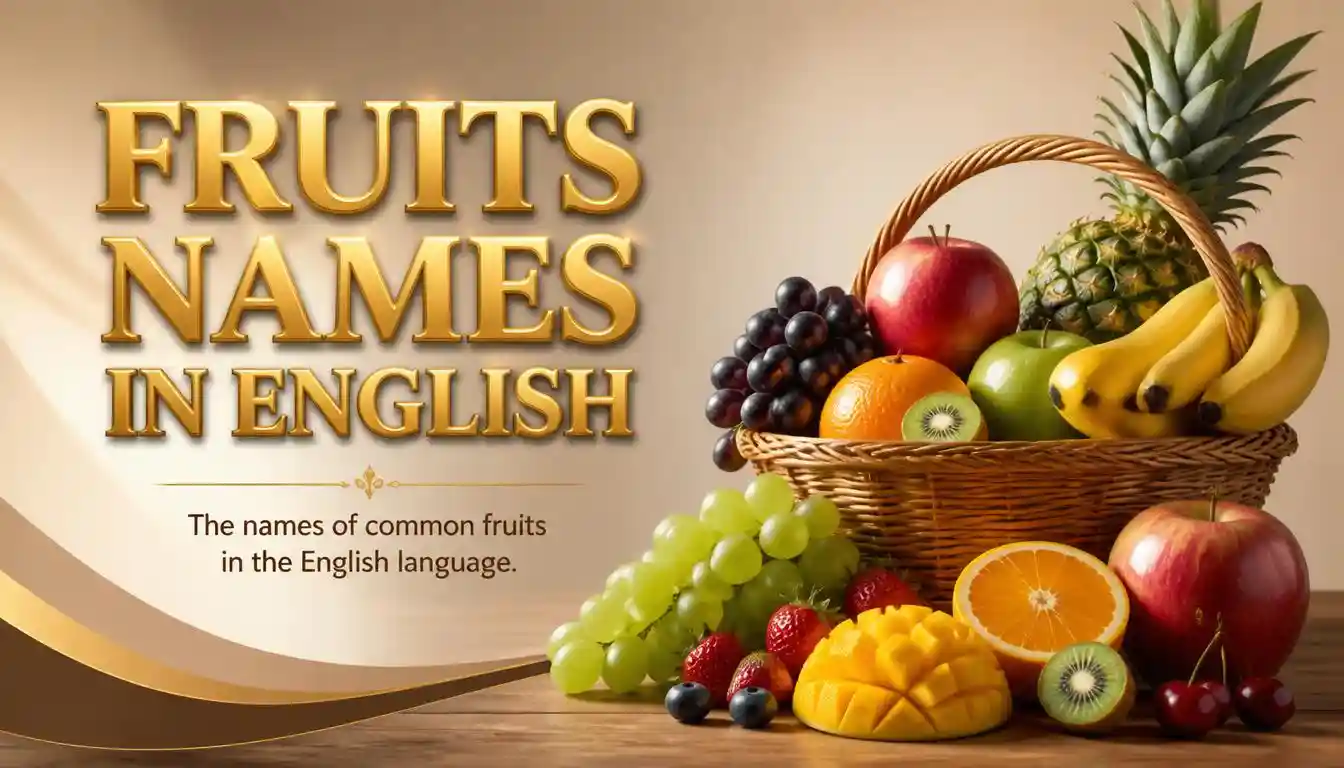
Looking for fruits names in English? This complete guide gives you a useful list of 100+ fruit names, including common fruits, tropical fruits, fruits, seasonal fruits, dry fruits, and fruit names from A to Z. You will also find simple meanings, pronunciation help, examples, and vocabulary tips for kids and English beginners.
Learning fruit names in English is useful in everyday conversations, shopping, cooking, school lessons, travel, and general English vocabulary. Words such as apple, banana, mango, orange, grapes, watermelon, pineapple, and strawberry are among the most familiar fruit words. More unusual examples include rambutan, mango Steen, dragon fruit, passion fruit, and star fruit.
If you want to improve your English vocabulary, this fruit names list gives you an easy place to start.
Common Fruit Names in English
Here are some of the most common fruit names in English that beginners and children should learn first:
| No. | Fruit Name | Simple Description |
| 1 | Apple | A round fruit that can be red, green, or yellow |
| 2 | Banana | A long, soft fruit with yellow skin |
| 3 | Mango | A sweet tropical fruit with juicy flesh |
| 4 | Orange | A round citrus fruit with juicy segments |
| 5 | Grapes | Small round fruits that grow in clusters |
| 6 | Watermelon | A large, juicy fruit with a green outer skin |
| 7 | Pineapple | A tropical fruit with rough skin and sweet flesh |
| 8 | Strawberry | A small red fruit with tiny seeds on its surface |
| 9 | Papaya | A tropical fruit with soft orange flesh |
| 10 | Guava | A tropical fruit that can have white or pink flesh |
| 11 | Peach | A soft stone fruit with fuzzy skin |
| 12 | Pear | A sweet fruit with a rounded bottom and narrow top |
| 13 | Cherry | A small round fruit, usually red or dark purple |
| 14 | Plum | A smooth-skinned stone fruit |
| 15 | Kiwi | A small fruit with brown skin and green flesh |
| 16 | Pomegranate | A round fruit filled with juicy red seeds |
| 17 | Coconut | A tropical fruit with a hard shell |
| 18 | Lemon | A yellow citrus fruit with a sour taste |
| 19 | Lime | A small green citrus fruit |
| 20 | Blueberry | A small blue-purple berry |
| 21 | Raspberry | A soft red berry made of small sections |
| 22 | Blackberry | A dark-colored berry |
| 23 | Apricot | A small orange stone fruit |
| 24 | Fig | A soft fruit with many tiny seeds |
| 25 | Date | A sweet fruit that grows on date palms |
These common words are a good starting point for fruit vocabulary in English because they appear frequently in everyday communication and learning materials.
Fruit Names With Meanings, Pronunciation, and Examples
Learning a word is easier when you understand how it sounds and how it works in a sentence. Here are some useful examples.
Apple
Pronunciation: /ˈæp.əl/
An apple is a round fruit that may have red, green, or yellow skin.
Example: I packed an apple for my lunch.
Banana
Pronunciation: /bəˈnæn.ə/
A banana is a long, soft fruit with yellow skin when ripe.
Example: She ate a banana before school.
Mango
Pronunciation: /ˈmæŋ.ɡoʊ/
A mango is a sweet tropical fruit with juicy yellow or orange flesh.
Example: Mango is one of my favorite fruits.
Orange
Pronunciation: /ˈɔːr.ɪndʒ/
An orange is a citrus fruit with a sweet and slightly sour flavor.
Example: He drank a glass of fresh orange juice.
Strawberry
Pronunciation: /ˈstrɔːˌber.i/
A strawberry is a small red fruit with tiny seeds on the outside.
Example: We added fresh strawberries to the dessert.
Watermelon
Pronunciation: /ˈwɔː.t̬ɚˌmel.ən/
A watermelon is a large fruit with juicy flesh and a thick green rind.
Example: We bought a watermelon for the picnic.
Pineapple
Pronunciation: /ˈpaɪnˌæp.əl/
A pineapple is a tropical fruit with rough skin and sweet, juicy flesh.
Example: She cut a fresh pineapple into small pieces.
Guava
Pronunciation: /ˈɡwɑː.və/
Guava is a tropical fruit that may have white, yellow, or pink flesh.
Example: This guava has a wonderful fragrance.
Using fruit names with pronunciation and examples helps English learners move beyond memorizing isolated words and begin using them naturally. Picture-based vocabulary resources also commonly pair fruit names with examples and pronunciation.
Fruit Names From A to Z
An A to Z fruit names list is an easy way to discover familiar and less common fruits.
The Fruits Starting With A
- Apple
- Apricot
- Avocado
- Açaí berry
- Amla
- Asian pear
- Atemoya
Fruits Starting With B
- Banana
- Blackberry
- Blueberry
- Blackcurrant
- Bilberry
- Boysenberry
- Breadfruit
- Bael
A Fruits Starting With C
- Cherry
- Coconut
- Cranberry
- Cantaloupe
- Clementine
- Custard apple
- Cashew apple
The Fruits Starting With D
- Date
- Dragon fruit
- Durian
Fruits Starting With E
- Elderberry
- Eggfruit
The Fruits Starting With F
- Fig
- Feijoa
Fruits Starting With G
- Grape
- Grapefruit
- Gooseberry
- Guava
- Goji berry
A Fruits Starting With H
- Honeydew
- Huckleberry
Fruits Starting With J
- Jackfruit
- Jujube
- Jabuticaba
The Fruits Starting With K
- Kiwi
- Kumquat
- Kiwano
Fruits Starting With L
- Lemon
- Lime
- Lychee
- Longan
- Loquat
The Fruits Starting With M
- Mango
- Melon
- Mandarin
- Mulberry
- Mangosteen
- Miracle fruit
Fruits Starting With N
- Nectarine
- Nance
- Noni
Fruits Starting With O
- Orange
- Olive
The Fruits Starting With P
- Papaya
- Peach
- Pear
- Plum
- Pineapple
- Pomegranate
- Passion fruit
- Persimmon
Fruits Starting With Q
- Quince
A Fruits Starting With R
- Raspberry
- Rambutan
- Redcurrant
- Rose apple
Fruits Starting With S
- Strawberry
- Star fruit
- Soursop
- Sapodilla
- Salak
- Sugar apple
A Fruits Starting With T
- Tangerine
- Tamarind
- Tomato
Fruits Starting With U
- Ugli fruit
The Fruits Starting With W
- Watermelon
- White currant
Fruits Starting With X
- Xigua
The Fruits Starting With Y
- Yuzu
A Fruits Starting With Z
- Ziziphus, commonly called jujube
A-Z organization is particularly useful for students who want to look up a fruit quickly or build vocabulary alphabetically. Similar current vocabulary guides use this format to cover both common and unusual fruits.
Different Types of Fruits
Fruit names become easier to remember when you organize them into groups.
Citrus Fruits
Citrus fruits are commonly known for their juicy flesh and bright, refreshing flavors.
Examples include:
- Orange
- Lemon
- Lime
- Grapefruit
- Mandarin
- Tangerine
- Clementine
- Yuzu
Berries
Common berry names include:
- Strawberry
- Blueberry
- Raspberry
- Blackberry
- Cranberry
- Gooseberry
- Elderberry
- Blackcurrant
- Redcurrant
Stone Fruits
Stone fruits contain a large hard seed, often called a stone or pit.
Examples include:
- Peach
- Plum
- Apricot
- Cherry
- Nectarine
Melons
Popular melon names include:
- Watermelon
- Cantaloupe
- Honeydew melon
- Muskmelon
- Canary melon
Tropical Fruits
Tropical fruits are associated with warm climates and include many familiar and unusual varieties.
Examples include:
- Mango
- Papaya
- Pineapple
- Banana
- Coconut
- Guava
- Jackfruit
- Lychee
- Rambutan
- Mangosteen
- Passion fruit
- Dragon fruit
Grouping words by category can make English fruit vocabulary easier to learn and remember.
Tropical Fruit Names
If you already know common fruits, try learning some tropical fruit names.
Dragon Fruit
Dragon fruit has colorful skin and flesh that may be white, pink, or red, with many small black seeds.
Rambutan
Rambutan is a tropical fruit with soft flesh surrounded by a hairy-looking red or yellow skin.
Mangosteen
Mangosteen is a tropical fruit with a thick purple outer shell and soft white segments inside.
Durian
Durian is a large tropical fruit famous for its strong smell and creamy flesh.
Passion Fruit
Passion fruit is usually round and has aromatic pulp containing many edible seeds.
Star Fruit
Star fruit, also called carambola, gets its name from its star-shaped slices.
Longan
Longan is a small tropical fruit related to lychee. Its translucent flesh surrounds a dark seed.
Jackfruit
Jackfruit is a large tropical fruit with numerous edible sections inside.
Soursop
Soursop is a tropical fruit with soft flesh and a distinctive sweet-and-tart flavor.
Sapodilla
Sapodilla is a sweet tropical fruit with soft brownish flesh.
These unusual fruit names can make vocabulary practice more interesting because they introduce words that learners may not encounter as often as apple, banana, or orange.
Seasonal Fruit Names
Fruit availability varies by region, climate, and growing conditions, so there is no single worldwide seasonal calendar. Still, learners often group fruits by the seasons in which they are commonly associated with local harvests or markets.
Summer Fruit Names
Common examples include:
- Mango
- Watermelon
- Peach
- Plum
- Cherry
- Lychee
- Melon
- Grapes
- Figs
- Berries
Winter Fruit Names
Depending on the region, commonly associated winter fruits include:
- Orange
- Grapefruit
- Pomegranate
- Pear
- Kiwi
- Guava
- Persimmon
- Cranberry
Fruits Available All Year
In many markets, these fruits are available during much of the year:
- Banana
- Apple
- Lemon
- Lime
- Pineapple
- Papaya
- Avocado
Seasonal availability can differ substantially between countries, so these categories should be treated as general vocabulary groups rather than universal harvest rules. Seasonal fruit lists commonly vary by region.
Dry Fruit Names in English
The phrase dry fruits is especially common in South Asian English. Depending on context, it may refer to dried fruits, nuts, or a mixture of both.
Some common dried-fruit names include:
- Raisins
- Dates
- Dried figs
- Dried apricots
- Dried cranberries
- Prunes
- Dried cherries
Common nuts and seeds often discussed alongside dry fruits include:
- Almonds
- Walnuts
- Cashews
- Pistachios
- Hazelnuts
- Peanuts
- Brazil nuts
For precise English usage, dried fruit normally refers to fruit that has had much of its water removed, while nuts and seeds are separate food categories.
Fruit Names by Color
Grouping fruit names by color can be a fun vocabulary exercise, especially for children.
Red Fruits
- Apple
- Strawberry
- Cherry
- Raspberry
- Pomegranate
- Watermelon
Yellow Fruits
- Banana
- Lemon
- Pineapple
- Yellow peach
- Yellow plum
Green Fruits
- Green apple
- Lime
- Kiwi
- Green grapes
- Pear
- Avocado
Purple or Dark Fruits
- Blackberry
- Blueberry
- Plum
- Blackcurrant
- Fig
Remember that fruit color can change according to variety and ripeness.
Fruit Names for Kids and English Beginners
Learning fruit names for kids is easier when children can see, say, read, and use each word.
Start with simple words such as:
- Apple
- Banana
- Orange
- Mango
- Grapes
- Pear
- Peach
- Cherry
- Lemon
- Strawberry
- Watermelon
- Pineapple
- Papaya
- Guava
- Kiwi
A simple learning method is:
See → Say → Spell → Use
For example:
Apple
- See an apple.
- Say “apple.”
- Spell A-P-P-L-E.
- Use it in a sentence: “I like apples.”
Pictures can help children connect an English word with the actual object. Beginner-focused fruit vocabulary resources commonly use pictures, pronunciation, spelling, and short examples for this reason.
How to Learn Fruit Names in English
You do not need to memorize 100 words in one sitting. Try these simple methods.
1. Start With 10 Common Fruits
Learn apple, bananas, oranges, mango, grapes, watermelon, pineapple, strawberry, lemon, and pear first.
2. Use Pictures
Look at the fruit while saying its English name. This creates a stronger connection between the word and the object.
3. Practice Pronunciation
Say each word slowly, then use it in a normal sentence.
4. Group Similar Words
Study citrus fruits together, berries together, tropical fruits together, and stone fruits together.
5. Write Simple Sentences
For example:
- I like mangoes.
- She bought three apples.
- The lemon tastes sour.
- We ate watermelon in summer.
6. Practice in Real Life
Use fruit vocabulary while shopping, cooking, making a grocery list, or talking about food.
7. Review Regularly
A few minutes of practice each day is usually more useful than trying to memorize a huge list once.
Fruit vocabulary is practical because these words appear in everyday activities such as shopping, recipes, meals, and conversations.
What Is a Fruit?
In everyday English, a fruit generally means an edible plant product that is commonly associated with sweetness or tartness and often contains seeds.
Examples include:
- Apple
- Mango
- Orange
- Banana
- Peach
- Grape
- Watermelon
There is also a difference between culinary and botanical classification. Botanically, some foods commonly treated as vegetables, including tomatoes and cucumbers, are fruits because of how they develop from flowers.
For everyday English vocabulary, however, it is usually more helpful to learn the common culinary categories people use in daily life.
What Is the Correct Phrase: “Fruits Names” or “Fruit Names”?
If you are learning English, the more natural phrase is:
Fruit names in English
You can also say:
Names of fruits in English
The search phrase “fruits names” is commonly used by learners, but in standard English, fruit names is the natural expression when “fruit” is being used as a modifier.
For example:
Natural: I am learning fruit names in English.
Less natural: I am learning fruits names in English.
Understanding this small grammar point can help English learners use the vocabulary more naturally.
Frequently Asked Questions About Fruit Names
What are the most common fruit names in English?
Some common fruit names are apple, banana, orange, mango, grapes, watermelon, pineapple, strawberry, pear, peach, cherry, lemon, lime, papaya, and guava.
What are 10 common fruits?
Ten common fruits are apple, banana, orange, mango, grapes, watermelon, pineapple, strawberry, pear, and peach.
What are 20 fruit names in English?
Twenty useful fruit names are apple, banana, orange, mango, grapes, watermelon, pineapple, strawberry, papaya, guava, peach, pear, cherry, plum, kiwi, pomegranate, coconut, lemon, lime, and blueberry.
What are some unusual fruit names?
Some less familiar fruit names include rambutan, mangosteen, durian, soursop, jabuticaba, miracle fruit, salak, longan, feijoa, and Buddha’s hand.
What are some tropical fruit names?
Mango, papaya, pineapple, coconut, banana, guava, passion fruit, dragon fruit, lychee, rambutan, mangosteen, jackfruit, and durian are examples of tropical fruits.
What are citrus fruit names?
Common citrus fruits include oranges, lemons, limes, grapefruit, mandarins, tangerines, clementines, and yuzu.
What are some fruit names for kids?
Apple, banana, orange, mango, grapes, strawberry, watermelon, pear, peach, pineapple, and kiwi are easy fruit names for children to learn.
What are fruit names from A to Z?
Examples include apple for A, banana for B, cherry for C, date for D, elderberry for E, fig for F, grape for G, honeydew for H, jackfruit for J, kiwi for K, lemon for L, mango for M, nectarine for N, orange for O, papaya for P, quince for Q, raspberry for R, strawberry for S, tangerine for T, ugli fruit for U, watermelon for W, xigua for X, yuzu for Y, and ziziphus for Z.
How can I learn fruit names in English?
Start with 10 common fruits, use pictures, practice pronunciation, group similar fruits together, write simple sentences, and review the vocabulary regularly.
What is the difference between fruit names and fruits names?
Fruit names is the natural standard English expression. “Fruits names” is a common learner search phrase, but it is not the usual grammatical form.
Final Thoughts
Learning fruits names in English is a simple and useful way to build everyday vocabulary. Start with familiar words such as apple, banana, mango, orange, grapes, and watermelon. Then expand your vocabulary with berries, citrus fruits, stone fruits, tropical fruits, seasonal fruits, and less common varieties.
An A to Z fruit names list is useful for quick reference, while pictures, pronunciation, meanings, and example sentences can make the vocabulary easier to remember. Children and beginners can start with a small group of common fruits and gradually add new words.

I’m Shahid Imran, the creator of Reachora Media, a website dedicated to names, their meanings, origins, pronunciations, and interesting name-related information. Explore my website to discover meaningful and unique names with helpful, easy-to-understand details: Reachora Media