







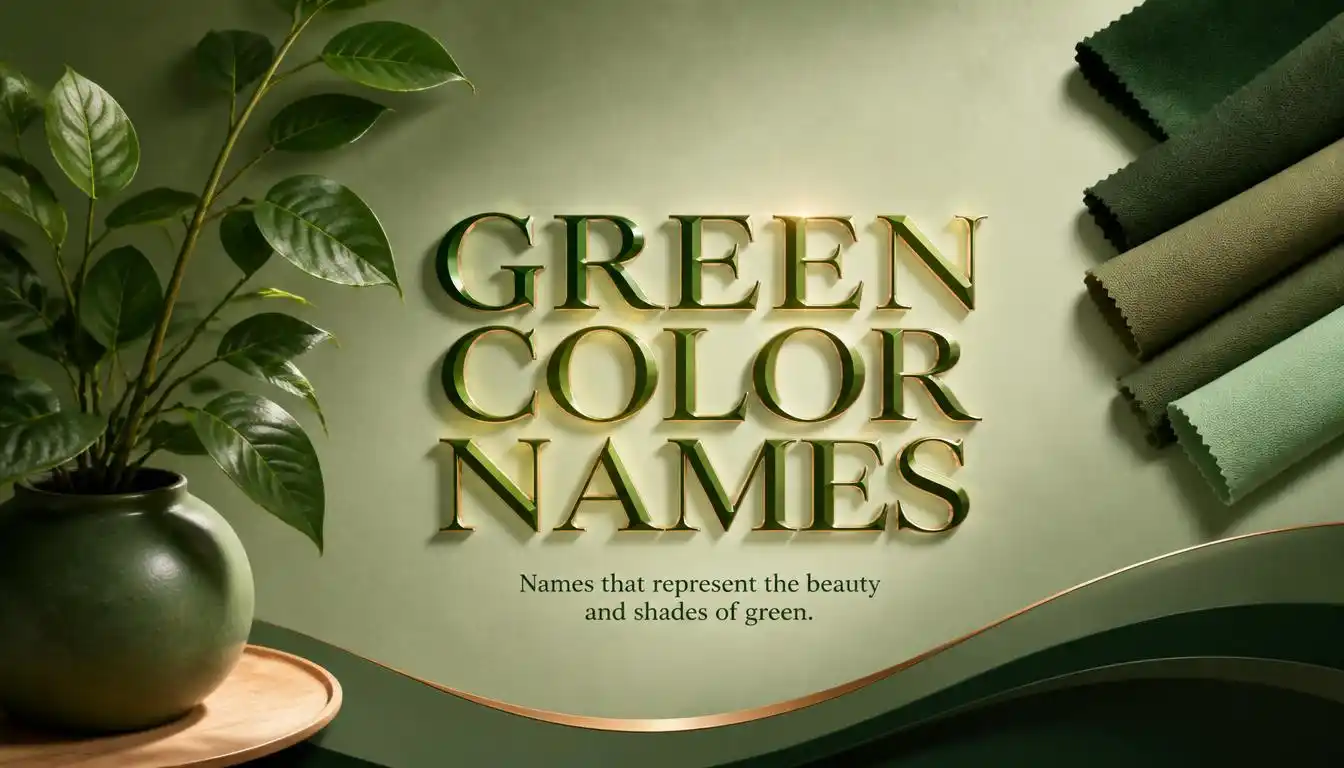
Green is much more than one simple color. From soft mint green and calming sage green to rich emerald green, earthy olive green, and deep forest green, there are countless ways to describe this versatile color family.
If you are looking for green color names, a color palette for a website, a branding shade, an interior color, or simply want to learn the names of green colors, this guide brings the most useful shades together in one place.
There is no single official number of green shades because color libraries use different naming systems. Some databases list dozens of commonly recognized shades, while others contain hundreds of named greens.
Below, you’ll find popular green color shades, their HEX codes, descriptions, and practical ways to understand the differences between them.
Popular Green Color Names and HEX Codes
Here are some of the most recognizable green shades with names and their commonly used HEX values.
| Green Color | HEX Code | Description |
| Green | #008000 | Classic medium green |
| Emerald Green | #50C878 | Rich gemstone-inspired green |
| Forest Green | #228B22 | Deep natural woodland green |
| Dark Green | #006400 | Strong, deep green |
| Light Green | #90EE90 | Soft and bright green |
| Lime Green | #32CD32 | Vivid yellow-leaning green |
| Mint Green | #98FF98 | Fresh, light green |
| Sage Green | #9CAF88 | Muted gray-green |
| Olive Green | #808000 | Earthy yellow-green |
| Jade Green | #00A86B | Rich blue-leaning green |
| Sea Green | #2E8B57 | Medium natural green |
| Hunter Green | #355E3B | Deep, subdued green |
| Kelly Green | #4CBB17 | Bright, energetic green |
| Teal | #008080 | Blue-green shade |
| Chartreuse | #7FFF00 | Bright yellow-green |
| Spring Green | #00FF7F | Fresh, vivid green |
| Viridian | #40826D | Cool, blue-green |
| Moss Green | #8A9A5B | Muted earthy green |
| Fern Green | #4F7942 | Natural plant-inspired green |
| Pistachio | #93C572 | Soft yellow-green |
HEX values can differ between color-reference systems, particularly for informal or non-standard color names. For example, Green as the standard CSS color is #008000, while Lime is #00FF00.
Light Green Color Names
Light green color names are usually associated with freshness, softness, plants, spring, and clean natural spaces.
Some useful light green shades include:
- Honeydew
- Mint Green
- Pale Green
- Light Green
- Tea Green
- Celadon
- Seafoam Green
- Pastel Green
- Aquamarine
- Laurel Green
- Pistachio
- Apple Green
Honeydew is an extremely pale green, while Light Green and Pale Green are more recognizable everyday shades. Mint Green adds a fresh, slightly cool appearance, while Celadon has a softer, more subdued quality.
These colors work particularly well when you want a gentle green color palette rather than a strong, saturated green. Current color references commonly place Honeydew, Tea Green, Mint, Celadon, and similar tones among light green shades.
Light Green HEX Codes
| Shade | HEX |
| Honeydew | #F0FFF0 |
| Light Green | #90EE90 |
| Mint Green | #98FF98 |
| Celadon | #ACE1AF |
| Pistachio | #93C572 |
| Seafoam | #93E9BE |
| Aquamarine | #7FFFD4 |
| Pastel Green | #77DD77 |
Dark Green Color Names
Dark green color names are ideal when you want a deeper, richer, more grounded appearance.
Popular examples include:
- Forest Green
- Hunter Green
- Dark Green
- Deep Green
- Bottle Green
- Pine Green
- British Racing Green
- Army Green
- Jungle Green
- Deep Forest Green
Forest Green is strongly associated with woodland and vegetation. Hunter Green is darker and more subdued, while Dark Green is a straightforward deep green.
Dark greens are frequently used in branding, fashion, packaging, websites, interiors, and nature-themed designs because they provide strong visual depth.
Dark Green HEX Codes
| Shade | HEX |
| Dark Green | #006400 |
| Forest Green | #228B22 |
| Hunter Green | #355E3B |
| Army Green | #4B5320 |
| British Racing Green | #004225 |
| Bottle Green | #006A4E |
| Deep Green | #013220 |
Bright and Vibrant Green Color Names
If you want a green that immediately attracts attention, look toward bright and highly saturated shades.
Popular bright green color names include:
- Lime
- Lime Green
- Neon Green
- Electric Green
- Chartreuse
- Spring Green
- Kelly Green
- Malachite
- Bright Green
- Vivid Green
- Jade Green
Lime is one of the brightest greens and leans strongly toward yellow. Neon Green is even more attention-grabbing, while Kelly Green provides a strong, recognizable mid-green appearance.
These shades can work well for sports graphics, youthful designs, technology projects, gaming visuals, posters, and other situations where a bold color is useful.
Natural and Earthy Green Color Names
Many green color names come directly from nature. Think about leaves, forests, moss, herbs, plants, fruits, and minerals.
Some popular natural green colors are:
- Forest Green
- Moss Green
- Fern Green
- Grass Green
- Olive Green
- Sage Green
- Eucalyptus
- Avocado Green
- Leaf Green
- Jungle Green
- Pine Green
- Sea Green
These shades are particularly useful for projects involving gardening, sustainability, wellness, food, outdoor activities, environmental topics, and natural products.
Sage, for example, is a muted green with a grayish quality, while Moss Green has a more earthy character. Forest Green is deeper and stronger, making it useful when you need more visual weight.
Many established green names are directly inspired by plants and natural materials, which explains why the green family contains so many botanical names.
Blue-Green Color Names
Some greens sit close to blue on the color spectrum. These are often called blue green shades and can create a cooler, cleaner appearance.
Popular blue-green color names include:
- Teal
- Sea Green
- Seafoam
- Aquamarine
- Turquoise
- Jade
- Viridian
- Cadmium Green
- Jungle Green
Teal is one of the best-known blue-green colors. Aquamarine is much lighter and brighter, while Viridian is a more subdued, blue-leaning green.
These shades can be especially attractive in modern websites, bathrooms, coastal designs, fashion, illustrations, and calming color palettes.
Yellow-Green Color Names
Green can also move toward yellow, producing lively and energetic shades.
Examples include:
- Lime
- Lime Green
- Chartreuse
- Yellow Green
- Apple Green
- Pear
- Peridot
- Spring Green
Chartreuse is an especially vivid yellow-green shade. Lime Green is brighter and more familiar in everyday design, while Olive Green is a much more muted yellow-green.
These shades can add energy to a palette without moving completely away from green.
Muted and Soft Green Color Names
Not every green needs to be bright or dark. Muted greens are created by reducing saturation or introducing gray, brown, or other influences.
Popular muted green shades include:
- Sage Green
- Olive Green
- Moss Green
- Fern Green
- Eucalyptus
- Laurel Green
- Army Green
- Pistachio
- Asparagus Green
- Viridian
Muted greens are popular when you want a sophisticated, natural, understated look.
For example, sage green can create a soft and relaxed appearance, while olive green feels warmer and more earthy. Moss green sits comfortably between natural and muted green families.
Green Color Names by Style and Mood
Sometimes you aren’t looking for an exact technical color. You simply know the feeling you want.
Soft and Calming Greens
Consider:
- Sage Green
- Mint Green
- Seafoam
- Celadon
- Honeydew
- Pastel Green
Elegant Green Shades
Try:
- Emerald Green
- Jade Green
- Hunter Green
- Forest Green
- Viridian
Fresh Green Shades
Good options include:
- Mint Green
- Spring Green
- Apple Green
- Lime Green
- Pistachio
Earthy Green Shades
Choose from:
- Olive Green
- Moss Green
- Fern Green
- Army Green
- Sage Green
- Eucalyptus
Bold Green Shades
For stronger visual impact:
- Neon Green
- Lime
- Chartreuse
- Kelly Green
- Electric Green
- Malachite
This approach is more useful than treating words such as pretty green, beautiful green, cool green, and unique green as completely separate color categories. In practice, those descriptions often overlap.
Green Color Chart: Light to Dark
If you want a simple green color chart, the easiest way to understand the family is to move from pale shades toward deeper shades.
| Category | Examples |
| Very Light | Honeydew, Mint Cream |
| Light | Mint Green, Pale Green, Celadon |
| Soft | Sage, Seafoam, Pistachio |
| Medium | Emerald, Jade, Sea Green |
| Bright | Lime, Kelly Green, Chartreuse |
| Deep | Forest Green, Hunter Green |
| Very Dark | Dark Green, Deep Green |
There isn’t a universal scale that determines exactly where every named shade belongs. Different color libraries categorize shades differently, so these groupings are practical rather than official.
Green Color Codes: HEX and RGB
If you’re choosing green for digital design, green color codes make it possible to reproduce a shade accurately.
HEX is commonly written as six characters after a #, while RGB expresses the same color using red, green, and blue values.
For example:
Forest Green
- HEX: #228B22
- RGB: 34, 139, 34
Emerald Green
- HEX: #50C878
- RGB: 80, 200, 120
Lime Green
- HEX: #32CD32
- RGB: 50, 205, 50
Olive Green
- HEX: #808000
- RGB: 128, 128, 0
Sea Green
- HEX: #2E8B57
- RGB: 46, 139, 87
Color references commonly provide HEX, RGB, HSL, and other representations for named greens.
Green Color Palettes for Design
A good green color palette doesn’t need to contain several shades that look almost identical. Combining different levels of brightness and saturation can create more useful contrast.
Natural Palette
- Sage Green
- Moss Green
- Forest Green
- Cream
- Warm Brown
Fresh Palette
- Mint Green
- Seafoam
- Light Green
- White
- Soft Gray
Luxury Palette
- Emerald Green
- Hunter Green
- Deep Green
- Cream
- Gold
Bright Palette
- Lime Green
- Kelly Green
- Spring Green
- White
- Dark Green
The best combination depends on the project. A palette intended for a wellness website may need a very different mood from one created for a sports brand.
How to Choose the Right Green Shade
Choosing between hundreds of different shades of green can seem difficult, but three questions usually make the decision easier.
First, how light or dark should it be?
Use mint, honeydew, or pale green for a soft appearance. Choose forest or hunter green when you need greater depth.
Second, should it lean toward blue or yellow?
Blue-green shades such as teal and viridian feel cooler. Yellow-green shades such as lime and chartreuse feel brighter and more energetic.
Third, should it be vivid or muted?
Emerald and lime are more saturated, while sage, olive, and moss are quieter.
For websites and interfaces, don’t choose a green only because its HEX code looks attractive. Check the actual text/background combination for readability and contrast. Color references also recommend checking contrast before using shades for text or interface elements.
What Makes a Good Green Color?
A good green color depends on what you are trying to achieve.
A natural design, forest, moss, fern, or sage may work well.
The luxury design, emerald or deep green may create the desired richness.
For a fresh and youthful design, mint, lime, or spring green may be more appropriate.
A calm design, sage, seafoam, celadon, and muted greens are useful choices.
There isn’t one universally “best” green. The right shade is the one that fits the purpose, surrounding colors, readability requirements, and visual style of the project.
How Many Shades of Green Are There?
There is no single official number of green shades.
The answer depends on what you count as a named color. One current database lists 279 named greens, while other references provide much smaller collections of commonly used shades.
Technically, digital displays can represent millions of RGB color combinations, so the number of possible green variations is vastly larger than the number of named colors.
That’s why terms such as green color names, green shades, and types of green usually refer to recognizable named colors rather than every possible numerical variation.
Frequently Asked Questions About Green Color Names
What are the most popular green color names?
Some widely recognized names include emerald green, forest green, mint green, sage green, olive green, lime green, dark green, jade green, sea green, and Kelly green.
What are some light green color names?
Popular light green names include honeydew, mint green, pale green, light green, tea green, celadon, seafoam, pastel green, and aquamarine.
What are some dark green color names?
Common dark green names include forest green, hunter green, dark green, deep green, bottle green, pine green, army green, and British racing green.
What is the HEX code for green?
The standard CSS color keyword green uses the HEX code #008000. This is different from the bright CSS color lime, which uses #00FF00.
What is the difference between emerald green and forest green?
Emerald green is a brighter, richer green associated with the gemstone emerald. Forest green is a deeper natural green associated with woodland vegetation. Their commonly listed HEX values are #50C878 and #228B22 respectively.
What are some unique green color names?
If you’re looking beyond everyday names, you can explore shades such as viridian, celadon, malachite, cadmium green, peridot, eucalyptus, jade, and chartreuse.
What are some pretty green colors?
The answer is subjective, but sage green, mint green, emerald green, seafoam, celadon, jade, and forest green are popular choices for attractive green palettes.
What are the best green shades for design?
It depends on the project. Sage and muted greens can suit calm natural designs, emerald and forest greens can provide depth, and lime or chartreuse can create a much more energetic look.
What colors are similar to green?
Colors close to green include yellow-green, lime, chartreuse, teal, sea green, turquoise, aquamarine, and viridian. Their exact appearance depends on how far the hue shifts toward yellow or blue.
Which green shades are inspired by nature?
Many green names come directly from nature, including forest green, moss green, fern green, grass green, olive green, eucalyptus, sage green, avocado green, and pine green.
Final Thoughts on Green Color Names
The world of green color names is surprisingly broad. A small change in brightness, saturation, or hue can turn a soft mint into a vibrant lime, a calm sage into an earthy olive, or a familiar green into a rich emerald.
If you need a quick reference, start with the major families: light green, dark green, bright green, muted green, blue-green, yellow-green, and natural green shades. Then use the HEX or RGB code when you need to reproduce a specific color accurately.
Most importantly, don’t choose a green simply because its name sounds appealing. Look at the actual shade, compare it with the colors around it, and consider how it will be used. That’s what turns a collection of green color names and codes into a genuinely useful color palette.

I’m Shahid Imran, the creator of Reachora Media, a website dedicated to names, their meanings, origins, pronunciations, and interesting name-related information. Explore my website to discover meaningful and unique names with helpful, easy-to-understand details: Reachora Media